«Anche le cose più semplici possono richiedere giorni». Tre attivisti palestinesi ai nostri microfoni
Fare attivismo in Palestina significa anche confrontarsi ogni giorno con ostacoli che spesso facciamo fatica a immaginare. Persino spostarsi da un luogo all’altro o organizzare un incontro può richiedere ore, a volte intere giornate.
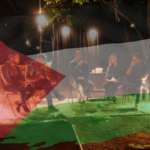
Durante il loro soggiorno a Roma abbiamo incontrato Mohammed, Mutasem e Mahen, tre attivisti palestinesi arrivati a La Città dell’Utopia nell’ambito del progetto Erasmus+ Sumud Youth.
Hanno trascorso alcune settimane insieme a SCI Italia, collaborando con la Scuola dell’Autoproduzione e partecipando al No Border Fest, dove hanno incontrato associazioni, volontari e altre realtà del territorio.
Dai loro racconti emerge un attivismo fatto di incontri diretti con agricoltori, giovani e comunità locali, di ascolto dei bisogni delle persone e di iniziative per promuovere i diritti e la partecipazione. Un lavoro che continua nonostante le difficoltà quotidiane.
Ascolta la nostra intervista in inglese con Mohammed, Mutasem e Mahen.
L’intervista è in inglese. Per seguirla nella lingua che preferisci, trovi qui sotto la trascrizione completa, che puoi tradurre selezionando una delle lingue disponibili dal menu in alto a sinistra.
Interviewee: Good morning. Good morning.
Interviewer: So, the first question for the introduction is, who are you?
Interviewee: We are volunteers in an association in Palestine. My association is called Youth Development Association in Ramallah. They give help for farmers and for youth. They listen to youth development about stress, life, pressure, anything for youth. After 7 October, we had to give people in Gaza any support for people in Gaza.
Interviewer: Can you maybe do it again and just like simply say, Hello, I am Mahen, I am Mohamed from the association.
Interviewee: Hello, my name is Mohamed Nofel and I am 28 years old. I am working in Shomoi Center in Palestine. It’s an association that supports farmers and youth development.
Interviewer: And somebody has their vibration on.
Interviewee: What?
Interviewer: Have you vibration on your phone?
Interviewee: No.
Interviewer: No, no, there was like a phone notification.
Interviewee: No, no, no.
Interviewer: Okay, can you? Every time you put something on the table, you know it makes all the noise.
Interviewee: Yes. So, me. Hello, my name is Moatassim. I am from Palestine, I live in Bethlehem. I am a volunteer at Shomoi Association and the Youth Advisory Panel in Palestine.
Interviewer: Thanks. Okay, so what is, in simple words, what is it that you are doing here? Why did you came all the way from Palestine to here, to Rome?
Interviewee: We are here to do job shadowing with SCI. And we prepare how we work in Palestine association, and how we support the youth people and farmers, and a lot of works in the association. We are here to work, to see how job shadowing in SCI. And SCI need to how we work in my association, or our association.
Interviewer: Could you say like we are here in part of the Samud project? Somebody of you?
Interviewee: Yeah, yeah. First of all, I am here for the No Border Festival.
Interviewer: Okay, again.
Interviewee: Yes. Okay, I am here for the No Border Festival, and it is so important to be here to speak about Palestine, and to let other people know what is the situation in Palestine in details. And we are here for the Samud project also.
Interviewer: You have to do it again.
Interviewee: Sorry.
Interviewer: It’s silent now?
Interviewee: No. Okay. Okay. I am here to be a speaker in No Border Festival, and it is important to be here to speak about Palestine in details, and to let people know about Palestine more and more, and what we do in our association as volunteers in Palestine. And we are also here for the job shadowing in the Samud project. And that’s it.
Interviewer: Okay.
Interviewer: Yes, yes, yes. So, which projects do you have done in Palestine in the past year?
Interviewee: We do in Palestine Faza’a project. We go on the area sea and help the farmers do olive picking and agriculture. Agriculture. Agriculture. Agriculture the trees on this area.
Interviewer: Cool.
Interviewee: Should I speak it again?
Interviewer: No, no, no.
Interviewer: What projects are you planning right now? What will be the future projects of your associations?
Interviewee: For Shumo Center, it will be continuing the Faza’a campaign, because it’s so important thing in Palestine, because we are trying to help farmers and people who live in areas sea, and areas who are getting, you know, affected and getting a lot of… I forgot some words.
Interviewer: What does it mean?
Interviewee: Okay, I will repeat.
Interviewer: And also, can you repeat? So, when I ask you what will be the future projects, your answer, please, the future project will be…
Interviewee: Okay. So, you take my question into your answer. Okay, okay. The future project will be, you know, continuing in Faza’a campaign, because it’s so important campaign for the farmers who’s getting attacked by the settlers, and we are trying to protect them and stand with them.
Interviewer: Why is it so important to do this specifically at area sea?
Interviewee: We are doing this in area sea, because these are the most areas who get attacked by the settlers, because there is no Palestinian police there, and because there is not a lot of Palestinians there, and area sea are near to the borders of Israel and near to the wall, so it’s easy for the settlers to go there and to attack them without any protection. So, this campaign, it’s for the farmers, because, you know, the police cannot reach these places very fast if they can reach these places, because the police can’t reach there unless the Israeli government allows them to go to area sea.
Interviewee: Can I speak about my association?
Interviewer: Yes, please.
Interviewee: The upcoming project of the Youth Development Association aims to empower young people through volunteering, leadership training, and community innovations. The association also plans to continue supporting vulnerable families in Gaza through humanitarian assistance while promoting youth participation, environmental awareness, and development in the Palestinian community.
Interviewer: Thank you so much. The next question would be, what is an important skill that youth should learn nowadays from your experience?
Interviewee: Important skill?
Interviewer: Yes, an important skill for youth.
Interviewee: For youth?
Interviewer: Local youth, for young people.
Interviewee: For young people. In Palestine? In Palestine, we learn the work to team and communication with each other, and we develop the skills of young people.
Interviewer: How do you try to teach them? Like, give us an example for one skill, please.
Interviewee: Like the skills of communication.
Interviewer: So you also like workshops?
Interviewee: Yes, workshops, and how to work together in a project, and connect with people in area sea, and when we go to farmers, like this. About youth, organizing supportive session with young people to listen to their concerns, discuss their emotional challenges, and help them cope with stress and difficult circumstances.
Interviewer: Cool. And can you take us through the process where you try to think about the projects? How do these ideas for this project come from? Like, how did you think about that?
Interviewee: Okay, the ideas of the projects come from, you know, the suffering of the Palestinian people. So, in Palestine, all the projects depend on trying to help people in different ways, because they suffer in a lot of ways also in Palestine. So, the Fazaa campaign idea came from seeing our families and seeing our relatives suffering from the settlers. So that’s why we are trying to help the farmers all over Palestine, because we’ve seen it in our families at first.
Interviewer: You are, all of you three work at the Fazaa campaign?
Interviewee: Me and Mohamed, he’s in another association. Yeah, I am in another association. Yeah.
Interviewer: Can you shortly explain the Fazaa campaign, like in three sentences, and also yours, in like three sentences?
Interviewee: About Fazaa?
Interviewer: They about Fazaa and you with your own.
Interviewee: Okay.
Interviewer: Say anything you think of, any questions.
Interviewee: No, your question is good, I want you to ask. Challenge and helping others and their silence.
Interviewer: Can you explain more? Like, say, in the Fazaa campaign, we do…
Interviewee: Okay. In Fazaa campaign, we are helping others and farmers to work in area C and pinking oil, and we challenge the… We challenge the Israeli soldiers with our resistance.
Interviewer: Can you say this?
Interviewee: Okay.
Interviewer: Repeat.
Interviewee: Let me answer this question, about… What was the question?
Interviewer: Like three sentences, what you do with the Fazaa campaign.
Interviewee: Okay. Fazaa campaign, Fazaa means people who come together, in Arabic. And it’s a campaign for fighting back the settlers who are trying to attack the Palestinian farmers, especially in area C. And the main goal of Fazaa is the solidarity and the people being together.
Interviewer: Excellent.
Interviewee: About my association project in Gaza, the association support children in Gaza through recreational activity, educational programs and devices that help them develop skills and maintain hope despite difficult circumstances.
Interviewer: That’s good. That’s very good. How concretely does it develop those ideas? Like, by which actions, for example, you try to maintain the hope? Is it like speaking, like speech?
Interviewee: Like speak, yeah, like learn, class, everything that the association have to support him, they support.
Interviewer: Can you maybe, like, give us, like, explain one day, from morning to afternoon, what you do with the kids? Like, in the morning, we do this class and walk us through the day?
Interviewee: Yeah.
Interviewer: And same for the Fazaa campaign, what do you do concretely, like, in one day, for example, to help the farmers, to help the people? Like, practically?
Interviewee: Yeah.
Interviewer: What are the concrete actions? Like, I understand the main goal, but how concretely do you do it?
Interviewee: We go to the farms, you know, in the places, and we place the olive trees there, like new olive trees, and we stand with them, and they call us when the settlers attack them, so we can be beside them while they are attacking them, to help them, and maybe to try to avoid the threat of the land, and of the trees, and of them also, because it’s a very dangerous thing to face the settlers and the soldiers alone, while you are one or two persons, so we need to be more, like, 20 or 30 persons to face this situation, and to open our cameras, and to try to raise our voice, so they can’t, you know, just kill these two people, and after that, we have nothing to do. About my association, how they do the project with children, and support children, in the morning, maybe we organize mental activities, educational classes, provide breakfast and lunch, arrange support match to encourage teamwork and improve children’s well-being.
Interviewer: What’s the favorite sports of the kids?
Interviewee: Football. We have basketball, football.
Interviewer: And you are here with the Sumut project, and it faces the water crisis that appears in all over the world. What are the challenges with, like, water, the water resources you have in Palestine? Maybe Mohamed, again?
Interviewee: I don’t understand the question.
Interviewer: So, you are here with the Sumut project, and also the Sumut project, one of the big goals of the Sumut project is to support the water and the land. Yes, to know, to develop new ways, how we can use the resources we have better, so water gets, like, less and less and less. What are the challenges you have in Palestine with, like, water?
Interviewee: The Israeli occupation controls most of these resources, including water, land, trees, everything. Yeah, if the village have resource, also water, anything, trees, the occupation settler came and take it. Yeah, from farmers, people, anyone. So, the goal is to… He is saying if the farmers have natural resources of water, they just can take it. But the water at all, in Palestine, we can’t control water at all, and that’s the problem, you know? The water comes from inside, it comes from Israel, and they control it, so they are deciding how much water we got, and the water is not enough, you know? It’s always not enough, and people are suffering from not getting that much of water, because they can control, they easily can control if the water could come to our land or not to come to our land, because it comes from inside to the West Bank, and they just can simply close the water, and we can’t have water in our land.
Interviewer: It’s horrible.
Interviewee: Yeah, and it’s the same for the electricity also. Other resources, there is nothing we can do about it.
Interviewer: Yeah, just luck.
Interviewee: Yeah. Just like randomness.
Interviewer: So, the Palestinian people doesn’t have just one… I don’t know what you call it…
Interviewee: No, no, wait, wait. Can I say something?
Interviewer: Yeah.
Interviewee: As you know, Palestine is pleased with many natural springs. I want to share a story from my village. Tana, a place in my village, where an Israeli forest took control of a natural water spring and forced the Palestinian farmers who depended on it to leave their land. They took the water spring and the land. What I was talking about that the Palestinians have a lot of water tanks up their home, not just one. We have like 20, 30 tanks of water, because when they allow the water to come to our land, all the people try to fill all the tanks, because they know that it will not come back, you know, after that easily. And that could cause also a problem, because, you know, everyone tries to have his own water, and they just cut the water, and if it ends, there is no water.
Interviewer: Was it always like this, or is it worse since the 7th of October?
Interviewee: Everything is worse since the 7th of October. They have put a new system, a gate system, through the cities. You can’t go from city to another unless the gates are open. They have put more checkpoints on the roads. The settlers became more dangerous. They attacked us so much harder after the 7th of October. The students can’t go to schools. They couldn’t go to schools normally since the 7th of October, and also the students, they couldn’t go to university since the 7th of October, and people who work between the cities couldn’t do that also since the 7th of October, because there is a lot of checkpoints. And, for example, if you are from Bethlehem and you work in Ramallah, before the 7th of October you could do it, to go to Ramallah and come back to Bethlehem. But now, to work in Ramallah, you have to live in Ramallah. And to work in Bethlehem, you have to live in Bethlehem. To work in every city, you have to live in the same city, because you will never know what’s going to come up the day after, because they are going to decide, for example, to close all the roads for no reason. The settlers just easily will decide to attack the Palestinians on the roads for no reason, and you will never know that. And Palestinian people try to help each other to know what’s going on the roads by having a lot of group chats on WhatsApp, Telegram, a lot of things, to see what’s going on the roads. And this is our daily life now. We check the groups to try to go anywhere. Even if you are going to the work, you have to check the group, because you don’t know where is the settler today, and where is the soldier today, and what’s going on in Palestine today. So it’s a very hard situation. I can add something about water. In 2025, Ramallah is a city in Palestine, as you know. Ramallah suffered from a severe water crisis, because the Israeli authorities did not allow Palestinians access to sufficient water supplies. They suffered. Maybe four months, in Ramallah, I have no water. Four months, yeah.
Interviewer: And with no water, what do people do?
Interviewee: People… People will buy a tank. They will buy a lot of money. So the aim for Israel is to make money by cutting the water supply.
Interviewer: You have to buy the tanks from Israel.
Interviewee: Yes, and a lot of money. There are a lot of people, especially the people who live in camps in Palestine, they can’t afford the money, and they suffer a lot from the water and electricity thing, because there is a lot of population in a small area, so they suffer a lot when they just cut it off.
Interviewer: Is there anything you want to add? Like information we did not ask about, that is important to you? Is there stuff you would like, for example, to say for European people, or people that are only aware of the situation by media coverage, to know about how they can support, or what they can understand from the situation?
Interviewee: So what European people could do for us?
Interviewer: Yeah, could do, or understand of what is really happening, despite the media coverage we have, what can be your personal and lively add to this.
Interviewee: Before I talk about what should Europeans give, I will talk about prisoners and Israeli prison. Palestinian prisoners face difficult conditions in Israeli prison, including restriction on their rights, limited family visits, and concerns about their treatment. That is after 7th of October, or before 7th of October. And I can talk about Palestinian face many difficulties every day. We suffer from occupation, unemployment, lack of water, and restriction on our freedom. Many young people, farmers, and other Palestinians are arrested. Palestinian prisoners in Israeli prisons face very difficult conditions, and their families suffer a lot. Despite all these changes, we continue to rest, support each other, and work for a better future. We believe in freedom, justice, and peace. And I have something to add about Israeli prisons. The Israeli government has a law that they can’t take any Palestinian from the West Bank, and they just couldn’t tell you what did you do. And that’s what they do with a lot of Palestinians. They just take them to prison, because they feel that they are going to do something in the future. But they have nothing on the papers, you know, against them. So they just put them in the prison and renew their sue every six months. And I have a friend who spent 24 months in prison, without knowing why he is in prison, and he lost like 30 kilograms of weight in these two years. He was bulkier than me, and when he came out he was like a stick. This situation happened more and more after the 7th of October. The prisoners, the Palestinian prisoners, fighted for their rights and it cost them their lives in the past to get some rights in the Israeli prisons. But after the 7th of October they lost everything. They were used to do strikes, not to eat, you know, for like 40 days, 50 days, 60 days, only water and salt, and they got rights in the prisons. But after that, after the 7th of October, nothing. There is no rights, there is no food, and there is a lot of disease in the prisons, and there is no medicine for the prisoners. About what can I talk about European support, as myself and as a representative of youth development, I hope European countries will do more than just express solidarity with Palestine. I wish they would use their influence to protect Palestinian human rights, support our community and help ensure that Palestinians have equal access to water, land, education and freedom. I also hope European countries will help but pressure to ensure that Palestinian tax revenues are transferred to the Palestinian Authority, as this money is essential for paying salary and providing basic service to our people. That is.
Interviewer: Thank you for the interview. All good?
Interviewee: All good.